$130M
lost per enterprise per year
to bad meetings
26 days
wasted per person, per year.
The equivalent of a full working month.
87%
of people dread their meetings
before they begin
58%
of meetings are seen
as unnecessary

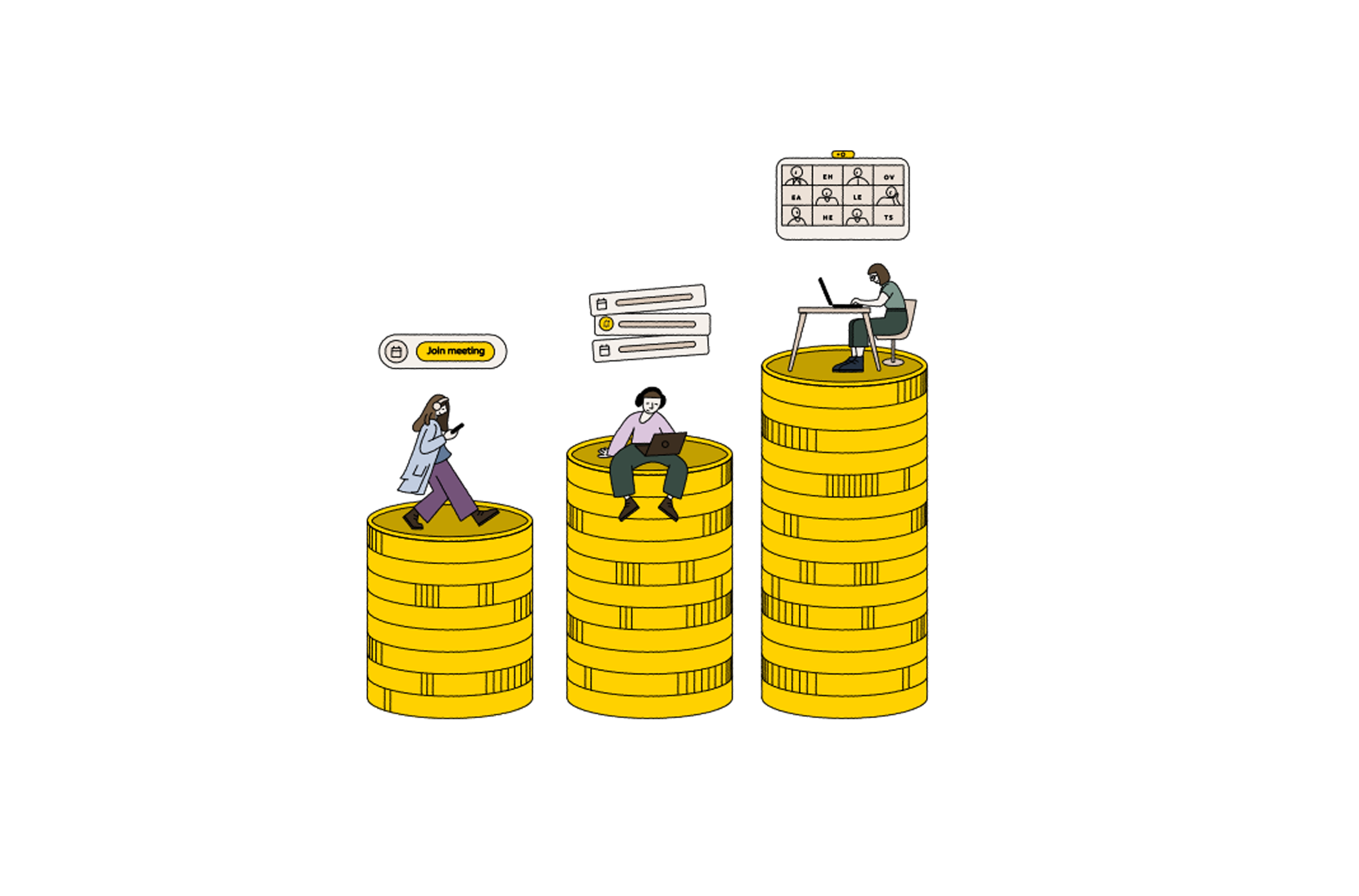
New research reveals that bad meetings are costing enterprise businesses over $130 million a year in wasted time, tech failures, and avoidable downstream work. Every business has the opportunity to reclaim that cost, and transform productivity and wellbeing across the workforce. Here's how.
lost per enterprise per year
to bad meetings
wasted per person, per year.
The equivalent of a full working month.
of people dread their meetings
before they begin
of meetings are seen
as unnecessary
In a world of distributed teams, async schedules, and organizational complexity, the meeting has become the connective tissue of professional life. What happens, and what fails, inside them has never mattered more. And yet most organizations run meetings as though one format can do everything. The same defaults applied to every purpose, every room, every team. Our research shows how badly that assumption costs us.

58% of all meeting time is considered wasted
Workers average 8 hours a week in meetings — a full working day. But 58% of that time is seen as unnecessary. That's 26 working days lost per person, per year, across every calendar.
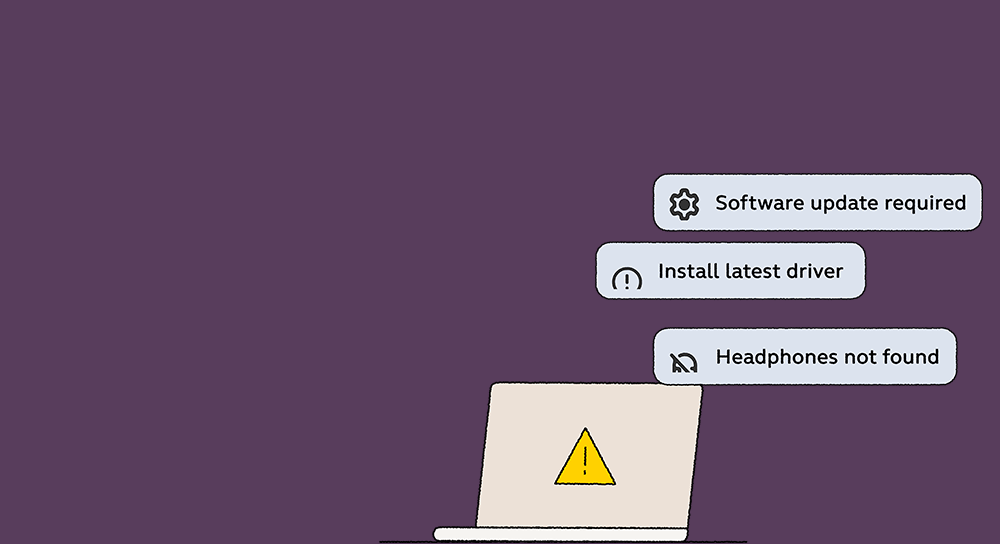
75% of meetings experience at least one tech failure
Broken audio. Frozen video. Rooms that won't connect. The cost is 11 minutes per meeting — three full working days per person per year. The invisible broken room has become a chronic operating condition.

42% of workers hit their energy limit within 2 hours
Workers pushed past capacity are 1.7× more likely to generate additional work after the meeting ends — the opposite of what meetings are for.

59% of meetings need a follow-up meeting to fix the first
A bad meeting doesn't end when the room empties. 59% generate additional work to recover from the confusion. Bad meetings breed bad meetings.

2x more likely to need a second meeting if video is abandoned
Giving up on video — one of the most common workarounds — is associated with an almost doubling of the likelihood to need another meeting. Visibility isn't a nice-to-have. It's essential infrastructure for productivity.

50% of online meeting participants are routinely left out
Half of remote participants are forgotten, talked over, or excluded. Women report worse outcomes across every measure. Workers in laptop-only rooms are 40% more likely to feel excluded.

91% of high-dread workers leave without clarity
Meeting dread is not just a feeling, it's a signal. Among those who dread meetings very often, 91% leave with unclear action items and 91% need a follow-up. Among those who never dread, those figures fall to 34% and 28%.
<1 in 3 workers trust AI meeting tools enough to use regularly
75% have tried AI meeting tools. Fewer than 1 in 3 rely on them. AI can accelerate a good meeting system. It cannot repair a broken one. The foundation has to come first.

The scale of wasted time, the rise of meeting dread, and why AI hasn't solved the problem it was supposed to fix.

How online meetings became the most failure-prone format in modern work — and why organizations have stopped noticing.

The full financial model — wasted time, tech failure costs, and a $130M figure most leadership teams have never seen on a balance sheet.

Why workarounds don't fix meetings — they multiply them. The patchwork meeting effect and the self-reinforcing dread cycle.
The majority of this cost doesn't come from poor strategy or calendar mismanagement. It comes from technology that fails at the moment it matters most, and the cascade of workarounds, follow-ups, and disengagement it creates every single day.
Lost to unnecessary meeting time per person, per year | 26 days |
Lost per meeting to technology failure | 11 mins |
Cost of tech failures per enterprise per year | $8.27M |
Working days lost per enterprise per year | 15,000 |
Total Meeting Debt per enterprise per year | $130M+ |
Six chapters of global research data, a complete cost model, and a practical framework for redesigning how your organization meets. Free to download.
RESEARCH CONDUCTED ACROSS · UK · US · GERMANY · FRANCE · DENMARK · SWEDEN · INDIA
Read the full report now to transform meetings in your organization from productivity drainers to performance boosters.