

Can’t Focus At Work? Here’s Why—And How to Fix It Fast
If you’ve been struggling to focus at work, you’ve probably blamed it on a lack of discipline. But focus issues aren’t always about willpower. A noisy work environment, poor sleep, burnout, or even doing work that no longer excites you can quietly chip away at your ability to stay focused.
And you’re not alone. According to Insightful, 79% of workers can’t go even one hour without a colleague interrupting, a phone beeping, or experiencing other forms of distraction.
The truth is, concentration isn’t something you can always force, especially when the root causes are external. Instead, it’s something you build by shaping your environment, habits, and sometimes your mindset. That means rethinking your work setup, daily routines, habits, mental health, and even the kind of work you do.
This article will break down what’s really getting in the way of your focus and how to fix it in a way that feels sustainable, not stressful.
Why you can’t focus at work
Before you can improve your focus, it helps to understand what’s really getting in the way. Here’s a list of some of the most common reasons people struggle to concentrate at work. You might recognize one (or several) showing up in your day.
1. Notifications and pings make your brain restart every few minutes
Unily’s Digital Noise Impact report revealed that nearly half of all employees are interrupted by digital noise at least once every 30 minutes. For those working an 8-hour day, that can add up to more than 160 distractions per week, just from notifications alone.
Here are the most common culprits:
- Phone notifications (62%)
- Email alerts (32%)
- Chat apps like Slack or Microsoft Teams (27%)
Each of these interruptions pulls your attention away from what you were doing and forces your brain to reset. You pause, process the new input, and then try to pick up where you left off—but that mental switch isn’t seamless.
In her book Attention Span, psychologist and UC Irvine professor Gloria Mark shares two striking findings from her decades of research on digital distractions:
- People spend an average of just 47 seconds on any one screen before getting distracted.
- After an interruption, it can take up to 25 minutes to fully refocus on the original task.
What makes this even more challenging is that even if you turn off your own notifications, digital distractions may still happen in the background—coworkers’ devices pinging, shared Slack channels buzzing, or the low hum of office equipment filling the space.
You don’t consciously choose to be distracted—your environment is simply full of tiny nudges pulling your attention away.
2. Background noise tricks your brain into staying alert—and stressed
If you work from home or in an open office, office chatter, heating and cooling systems, hums, construction noise, car honks, or even household sounds disrupt your ability to concentrate.
Here are some findings we made in our research:
- 47% of knowledge workers said noise is a major stressor at work and keeps them from concentrating.
- 74% of employees said that working in a loud environment made them mentally and physically tired.
- 63% said working in a noisy environment made them feel less passionate about their work.
This goes to show that, while these sounds may seem routine, they make it harder for your brain to stay fully engaged with your work. They also cause well-being issues like mental and physical fatigue.
But the main culprit isn’t the hum of heating and cooling systems or car honks—it’s conversations. In Unily’s report, 71% of employees said their focus is broken by coworkers interrupting their work. Constant noise causes physiological effects that trigger the release of cortisol and catecholamines, hormones meant to help you respond to threats.
Instead of fully focusing, your brain stays in defense mode—filtering, blocking, and recovering from distractions. That constant low-level strain makes it tougher to think clearly, solve problems, or even finish simple tasks without losing momentum.
3. Burnout slows down your brain, even when you're trying to push through.
You can have every intention to work, but when you’re burned out, your brain doesn’t cooperate. Burnout isn’t just about feeling tired—it’s a full-body slowdown that affects how you think, respond, and perform. The more exhausted you are, the harder it becomes to stay mentally present, no matter how motivated you are.
In Grant Thornton’s 2024 report, 51% of employees said they experienced burnout at work in the past year. The most common reasons were:
- Mental and emotional stress (63%)
- Long hours (54%)
- Shortage of workers (52%)
- Lack of work-life balance (38%)
- Inefficient processes and systems (33%)
But burnout doesn’t just happen. It builds gradually, so many people don’t immediately realize it’s the reason it’s harder to stay organized, complete tasks, or even care about the work in front of you. It’s not a sign that you’re slacking—it’s a sign that your brain is overloaded and stretched too thin.
4. Poor sleep, hydration, or nutrition makes thinking feel like a chore.
Physical health and mental energy are closely connected, even if your job is mostly spent behind a screen. Research shows that when your basic health needs aren’t met, it becomes harder to stay mentally alert, process information, or get through your work without feeling drained.
- Lack of sleep dulls reaction time and slows down your thinking.
- Dehydration can lead to headaches, reduced short-term memory, and lower alertness.
- Poor nutrition deprives your brain of the fuel it needs to function properly.
- Prolonged inactivity can leave your body stiff and your energy levels low.
You might not always notice these effects right away, but they build over time. By mid-afternoon, your energy drops faster, your attention wanders more easily, and even simple tasks start to feel harder than they should.
5. Too much work splits your attention in every direction
Juggling too many tasks at once and switching between them constantly can leave you feeling busy but unproductive.
Instead of moving through your day with clarity, your attention gets pulled in multiple directions. The constant mental gear-shifting—going from one unfinished task to another—gradually wears down your ability to stay organized, make decisions, or think deeply about any one thing.
And it’s not just the volume of work that creates pressure. Unclear priorities, vague expectations, and disorganized workflows make things worse. You’re not just doing too much—you’re doing it in a way that offers little direction or rhythm.
And when nothing feels truly under control, your mental bandwidth keeps shrinking, even if you’re working nonstop.
6. Work that feels meaningless makes it hard to care
When your role doesn’t align with your interests, values, or long-term goals, it’s easy to feel disconnected, even if you’re technically doing your job well. That disconnect is known as career misalignment.
This mismatch between your day-to-day tasks and what truly matters to you can gradually lead to a loss of energy and drive. Over time, it shows up as procrastination, mental fatigue, or a constant feeling of going through the motions.
In his Forbes article, psychologist Mark Travers describes this experience as ‘misalignment burnout.’ This happens when you repeatedly engage in work that goes against your values or beliefs, creating a gap between who you are and what you do.
So, instead of working from a place of genuine interest or meaning, you start operating out of obligation—chasing external rewards like money, status, or the need to meet others’ expectations.
When that sense of personal connection disappears, it becomes harder to stay mentally engaged. Your brain checks out more often, tasks feel heavier, and distractions become harder to resist.
7. Mental health struggles cloud your thinking
Mental health issues like anxiety and depression directly affect how your brain works during the day, making even simple tasks feel more demanding than they should. These challenges impact how you process information, manage tasks, and respond to pressure.
And they’re more common than people realize.
According to Calm’s 2024 Voice of the Workplace report:
- 69% of employees say their mental health has stayed the same or worsened in the past year
- 81% have struggled with anxiety and stress recently
- 61% have felt depressed or hopeless recently
When your mental health is strained, it shows up in different ways, including:
- Racing thoughts or overthinking
- Low energy or fatigue
- Difficulty starting tasks
- Forgetfulness or mental fog
- Irritability or restlessness
What makes these issues tricky is how gradually they build. It might start with needing more time to get through tasks, missing small details, or feeling mentally tired by midday. But over time, it adds up.
And because these symptoms aren’t always loud or dramatic, they’re often overlooked or misinterpreted as laziness or lack of motivation. But in reality, you may just be struggling under the weight of something deeper.
8. Neurodivergent brains require a different approach to work
Conditions like Attention-Deficit/Hyperactivity Disorder (ADHD), autism spectrum disorder (ASD), or other forms of neurodivergence can shape how the brain manages attention, task switching, and mental organization.
These aren’t flaws—they’re differences in how information is processed. Someone with ADHD, for example, might find it easy to hyper-focus on one task but struggle to get started on another. They may also feel easily distracted, restless, or overwhelmed by routine tasks.
Others might deal with learning differences, like dyslexia and dyspraxia, that impact memory, comprehension, or workflow in subtle ways.
If you’ve tried the usual focus strategies—time-blocking, Pomodoro, to-do lists—and nothing seems to help, try exploring whether something deeper is going on.
Read: Productivity expert Chris Bailey on how to maintain hyper-focus at work
How to regain focus fast
When you’re stuck, distracted, or overwhelmed, sometimes you just need something that works right now. These tips are quick, practical techniques you can try immediately—no major lifestyle changes required.
They’re not long-term fixes, but they can help you reset and regain control when your attention starts to slip.
1. Drink water, move, breathe, or write to refocus fast.
- Drink water. Even mild dehydration can reduce mental clarity and slow cognitive function. A few sips of water can help your brain rehydrate and sharpen your thinking almost immediately.
- Do a quick 2-minute stretch or walk. Physical movement increases blood flow, delivers more oxygen to your brain, and signals your body to re-energize. A quick stretch or a short walk around the room can boost alertness and ease built-up tension.
- Step outside for sunlight or fresh air. Exposure to natural light and fresh air can help reset your internal rhythm, refresh your senses, and lift your mood.
- Do a 1-minute deep breathing exercise. Slow, intentional breathing activates your parasympathetic nervous system—the part of your body that helps calm stress and restore balance. One minute of this can help lower mental noise and bring your attention back to the present moment.
- Change your posture or switch locations. If you’ve been sitting in the same position for too long, your body can start to feel sluggish or cramped. Adjusting your posture or moving to a different workspace can refresh your energy and break the mental monotony.
- Do a quick “brain dump.” Sometimes, your head feels scattered simply because you’re carrying too many loose thoughts. Take 3-5 minutes to jot down whatever’s crowding your mind—tasks, worries, reminders—so you can mentally clear the slate and return to your work with less mental clutter.
2. Silence your space to stop distractions before they start
- Turn off non-essential notifications. Every ping, pop-up, or vibration pulls your attention away from your task. Silencing unnecessary alerts on both your phone and desktop gives your brain fewer reasons to switch gears. Use your phone’s native work mode!
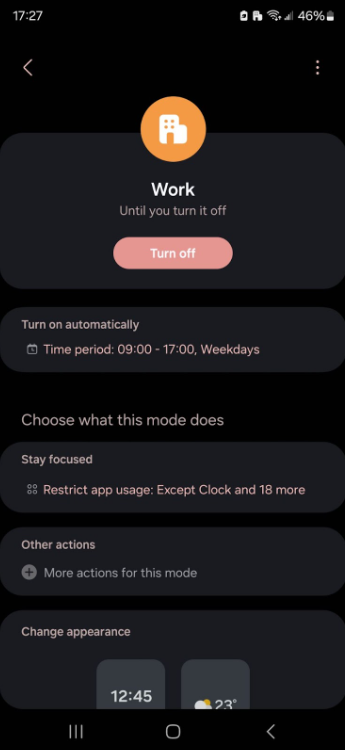
- Declutter your physical workspace. Visual clutter competes for your attention, even if you're not actively looking at it. Clearing your desk of unused items, piles of paper, or scattered objects can help your brain feel more at ease and less overstimulated.
- Separate work and personal digital tools. If you work remotely, it’s easy for personal distractions to bleed into your workday. Keeping separate tabs, browser profiles, or even different devices for work tasks helps you stay focused.
3. Structure your day around your natural flow.
When you work in a way that aligns with how your brain naturally functions, staying productive feels easier and less exhausting.
- Group similar tasks together (batching). Batching means doing similar tasks in the same time block so your brain doesn’t need to keep shifting gears. For example, instead of replying to emails randomly throughout the day, dedicate one or two specific windows (say, 10–10:30 am and 3–3:30 pm) to handle all your inbox tasks at once.
- Use time blocks instead of long to-do lists. A long list of tasks can feel overwhelming and unfocused. However, time blocking helps you assign chunks of time to specific tasks or categories of work.
- So, you could block 9–11 am for project work, 11–11:30 am for admin tasks, and 2–3:30 pm for meetings or collaborative work. Even if you don’t finish every task, you’re still working in focused zones with clearer direction.
- Schedule deep work during your peak energy hours. Not everyone’s most productive time is in the morning. Pay attention to when you naturally feel sharpest—whether that’s mid-morning, early afternoon, or even late evening—and protect that time for your most demanding work.
- So, if you’re mentally clearer from 10 am to noon, don’t schedule meetings then. Use that time for writing, problem-solving, or anything that needs more focus.
- Add buffer time between meetings and tasks. Jumping straight from one task or meeting to another leaves no room to reset. Adding short breaks or transition time (say, 15 minutes) helps catch your breath, take notes, or mentally shift before starting your next task.
- Create a shutdown ritual at the end of your day. A structured wind-down routine signals to your brain that work is done, which helps you mentally disconnect and avoid carrying work stress into your evening.
- There are a couple of things you can try. For example, you can review what you accomplished that day, write the next day’s top priorities, close open browser tabs, or physically tidy your workspace.
- You could also set an alarm to mark the end of your work hours—or a small signal like dimming the lights or playing a “wrap-up” playlist.
4. Build a focus toolkit to support deep work
When your environment works against you, a few well-chosen tools can create the support system your brain needs to do deep, uninterrupted work.
Here are some essentials to include in your focus toolkit:
- Noise-canceling headsets. A good headset should do two things well: block out background noise and signal to others that you're in work mode. Professional-grade headsets like Jabra Evolve2 75 and Evolve2 85 do exactly that.
- They offer advanced active noise cancellation (ANC) and multi-microphone technology that shuts out outside noise and helps you sound crystal-clear on calls. They also come with a busylight feature—a subtle visual cue that lets people know you’re working without you having to say a word.
- Ambient sound or focus music apps. Apps like Brain.fm, Noisli, or Endel let you choose a sound environment that matches your energy and work style. So, you can play some white noise, brown noise, or focus music like lo-fi or minimalist instrumental tracks to block out unwanted sounds and stay in the zone.
- Website blockers. Tools like Freedom, Cold Turkey, and FocusMe let you block distracting websites or apps for specific time windows. You can customize what’s off-limits and when, so you're less likely to derail a deep work session by opening a new tab out of habit.
- Physical planners or visual task boards. Digital to-do lists are great, but sometimes, having your tasks physically in front of you keeps things clearer. A paper planner, sticky note wall, or visual Kanban board helps you track progress and stay work-oriented throughout the day.
- Ergonomic tools and equipment. Supportive chairs, adjustable desks, laptop risers, and external keyboards or mice help reduce physical tension and let you work in a position that supports energy, not drains it.
- Blue light filters or screen adjustment tools. Long hours at a screen can lead to eye strain, fatigue, and headaches—all of which reduce mental stamina. Using blue light filter glasses or enabling built-in screen filters (like Night Shift or f.lux) can help reduce that strain and extend your energy throughout the day.
Read: Rahaf Harfoush on how to master your productivity in a world on overdrive
What to do if it’s more than just distractions
Sometimes, quick fixes aren’t enough. Here, we’ll look at longer-term strategies—the kind that help when attention struggles are tied to burnout, health, or something more systemic.
These strategies are about healing what’s been draining attention in the first place.
1. Rule out mental health & neurodivergency with a professional evaluation
If you still have trouble focusing at work, even after trying quick fixes like managing your schedule and reducing distractions, it might be time to look a little deeper.
Struggles with attention can sometimes be symptoms of underlying conditions like ADHD, anxiety, depression, or burnout. And the only way to truly understand what’s going on is to talk to a relevant health professional.
A professional can help:
- Assess you for mental health & neurodivergent conditions like ADHD, anxiety disorders, or clinical depression.
- Provide a formal diagnosis if needed, which opens the door to workplace accommodations, better support, or treatment options that actually make a difference.
- Share practical strategies tailored to how your brain works—whether that’s cognitive tools, routines, or behavioral techniques that help you manage your workload more effectively.
- Help you navigate workplace challenges, especially if your role or environment contributes to stress, disengagement, or burnout.
- Build a longer-term plan, so you’re not just getting through the day but actually improving how you feel and function over time.
2. Strengthen your body to support your mind
Stretching or drinking water can give you a quick boost, but if you’re often foggy, drained, or unfocused, it’s worth looking at your long-term habits around sleep, nutrition, movement, and hydration.
Here are some health habits you could adopt:
- Stay consistently hydrated. Dehydration can lead to fatigue, headaches, and slower thinking. Keep water nearby and aim to drink regularly throughout the day, not just when you feel thirsty.
- Eat balanced meals. Consistent, well-balanced meals give your brain the steady fuel it needs to stay sharp throughout the day. Think protein for sustained energy, fiber to keep you full, and healthy fats to support memory and cognitive function.
- Move your body daily. The Centers for Disease Control and Prevention (CDC) recommends that adults get at least 150 minutes of moderate-intensity physical activity per week. That might sound like a lot, but you can structure exercise in ways that make sense for your daily schedule.
- For example, you might take a 25-minute walk each evening, do four 40-minute workouts a week, or even break it into shorter bursts throughout the day. Movement improves blood flow to the brain, supports memory and mood, and helps reduce the mental sluggishness that builds up from long hours of sitting.
- Get better quality sleep. Poor sleep doesn’t just make you tired—it affects attention, decision-making, and emotional regulation. And when sleep issues become chronic, your everyday mental functioning takes a hit.
- The CDC recommends that adults ages 18 to 65 get 7–9 hours of sleep each night to function at their best. To achieve that, create a consistent wind-down routine, limit screen time at night, and stick to regular sleep and wake times, even on weekends. This gives your brain the rest it needs to reset and recover.
3. Manage the stress that drains your energy
Chronic stress can cloud your judgment, drain your energy, and make it harder to stay motivated or organized. You can’t always eliminate stress entirely, but here are a few ways to manage and regulate it:
- Practice mindfulness. Mindfulness helps your brain slow down and reset. You don’t need hour-long meditations—just a few minutes of breathing, body scans, or guided focus sessions can ease tension and calm your nervous system. You can try guided sessions using apps like Headspace or Calm, or simply sit quietly and focus on your breath for a few minutes between tasks.
- Talk to a therapist or coach. Chronic stress sometimes comes from patterns you’re not fully aware of, like perfectionism, people-pleasing, or internal pressure to overperform. A therapist or mental health coach can help you unearth what’s driving your stress and develop healthier ways to manage it.
- Protect your time with clear boundaries. Stress spikes when you’re constantly available—answering emails at all hours, saying yes to every request, or letting meetings spill into your evenings. Set firm boundaries like blocking off no-meeting hours, closing your laptop by a specific time, or saying no when your plate is full. These boundaries aren’t selfish—they help you maintain mental energy.
- Address the stressors you can control. Pinpoint and reduce the stressors you can control, e.g., a recurring task you could automate, a meeting you could replace with an email, or a messy workflow that’s creating friction. Reducing exposure to these stressors eases mental strain and helps you concentrate better at work.
4. Reevaluate your workload
If your days constantly feel packed, but your to-do list never seems to shrink, you may have too many tasks on your plate or be working with unclear expectations. If that’s the case, have a conversation with your manager or team lead about it.
That conversation can include:
- Clarifying what your priorities actually are so you’re not trying to do everything at once.
- Setting realistic limits on task volume, especially if your role has grown without adjustments to scope.
- Identifying tasks that can be paused, delegated, or automated.
- Requesting better structure or support, like clearer deadlines, fewer last-minute requests, or process improvements.
Sometimes, the fix isn’t doing more—it’s doing less, with more clarity. And you don’t have to wait to burn out before speaking up about what’s not sustainable.
5. Revisit whether your role still feels right for you
If you’ve tried everything—productivity techniques, environment changes, even stress management—and you’re still feeling disconnected from your work, step back and ask a harder question: Is this role or company still a good fit for you?
Sometimes, not being able to focus is a sign that the work no longer aligns with your strengths, values, or long-term goals. And when this happens, motivation fades, no matter how hard you try to push through.
Here are a few ways to determine whether your current role still fits:
- Notice when you’re energized vs. when you check out. Pay attention to the tasks that light you up versus the ones that leave you feeling distracted or drained. Are you spending most of your time doing the kind of work that excites you, or just going through the motions?
- Reconnect with your career goals. Sometimes, the day-to-day grind pulls you away from your bigger picture. Take a step back and ask yourself:
- What do I want to grow into professionally?
- What kind of work feels meaningful to me?
- Are those things present in my current role?
- Talk to your manager about your role. If you’re feeling misaligned, talk to your manager about shifting toward more aligned responsibilities. That might mean taking on different projects, exploring internal opportunities, or redesigning parts of your role. You don’t always have to leave—sometimes, the right changes can happen where you are.
- Consider whether it’s time to pivot. If the role or company no longer fits, even after adjustments, it’s okay to start thinking about a new direction. That doesn’t mean you’ve failed. It’s a sign that you’re cognizant of the kind of environment or role you need in order to thrive at work.
Read: Five hard-won pieces of advice to maximise your productivity while working on the move
You don’t need more willpower—you need the right setup
If you’ve been blaming yourself for struggling to focus, take a breath. It’s not about willpower alone; it’s also about what’s happening around and within you. When you take care of your body, protect your mental energy, and create a setup that supports you, focus becomes easier.
But it starts with identifying what’s actually getting in your way—whether it’s stress, poor health habits, work overload, or simply a noisy environment.
For many, noise is the biggest hurdle. In fact, 47% of workers say noise is their top workplace stressor. If you struggle with noise, one of the fastest ways to reclaim your focus is by using a professional-grade noise-canceling headset to block out distractions.
Jabra Evolve2 headsets are designed to do just that—with advanced ANC that blocks out office chatter, notifications, traffic noise, heating and cooling system hums, and more. They also feature multi-microphone technology for crystal-clear calls and a busylight to signal when you’re in deep work mode.
And if you want headphones without a visible mic, Evolve2 75 and Evolve2 85 have mic booms that fold out of view when not in use—perfect for switching between meetings and quiet listening.
Explore our Evolve2 headset series and make your workday quieter and more productive.